

Modern radar systems are key in keeping an eye on our surroundings. They use radio wave technology to spot and track objects from far away.
They send out electromagnetic waves and listen for echoes. This lets them know exactly where, how fast, and in which direction an object is moving.
Anyone researching radar work detecting may also want to understand talk techy speaking geek before deciding on the best option.
Radar was first used in World War II. It’s now vital in flying, sailing, and predicting the weather.
By studying the signals that bounce back, radar systems can find objects accurately. This has changed how we travel and predict the weather. Radar technology keeps getting better, helping us understand our world more clearly.
The Fundamental Principles of Radar Operation
Radar technology uses radio waves to detect objects. It sends out and receives these waves. This is the core of how radar works today.
Understanding Radio Waves and Their Properties
Radar systems use microwave energy. This energy is part of the electromagnetic spectrum. It has special properties that help detect objects in different places.
Frequency, Wavelength, and Propagation Characteristics
The frequency and wavelength of radar signals are key. Higher frequency signals are more detailed but don’t travel as far. Lower frequencies can go through obstacles better.
Related Posts:






Radio wave propagation shows how signals move through mediums. Things like weather and terrain can change how strong the signal is.
The Radar Equation: Calculating Detection Capabilities
The radar equation is a math formula for radar performance. It helps engineers figure out how far and well a radar can see objects.
Key Variables Affecting Radar Performance
Several things affect how well a radar works:
- Transmitted power: The strength of the outgoing signal
- Antenna gain: How well the antenna focuses energy
- Target radar cross-section: The object’s reflectivity
- Receiver sensitivity: The system’s ability to detect weak signals
Today’s radar uses digital processing and machine learning. These help improve how well radar can detect objects. This means better performance in tough conditions.
Knowing these factors helps engineers make radars that work well. They make sure the radar meets its goals within certain limits.
Core Components of Radar Systems
Modern radar systems have key parts that work together. They help detect and analyse objects from a distance. These parts are vital for detection technology in many fields.
Transmitter: Generating Radio Wave Signals
The transmitter unit is at the heart of radar systems. It creates the electromagnetic energy pulses that travel through space. These pulses are high-frequency radio waves in the microwave spectrum.
Magnetron and Klystron Technologies
Two main technologies are used in radar transmitters. The cavity magnetron was developed during World War II. It made radar systems more compact and precise. Klystron amplifiers provide more power and stability for specific needs.
Antenna System: Transmission and Reception
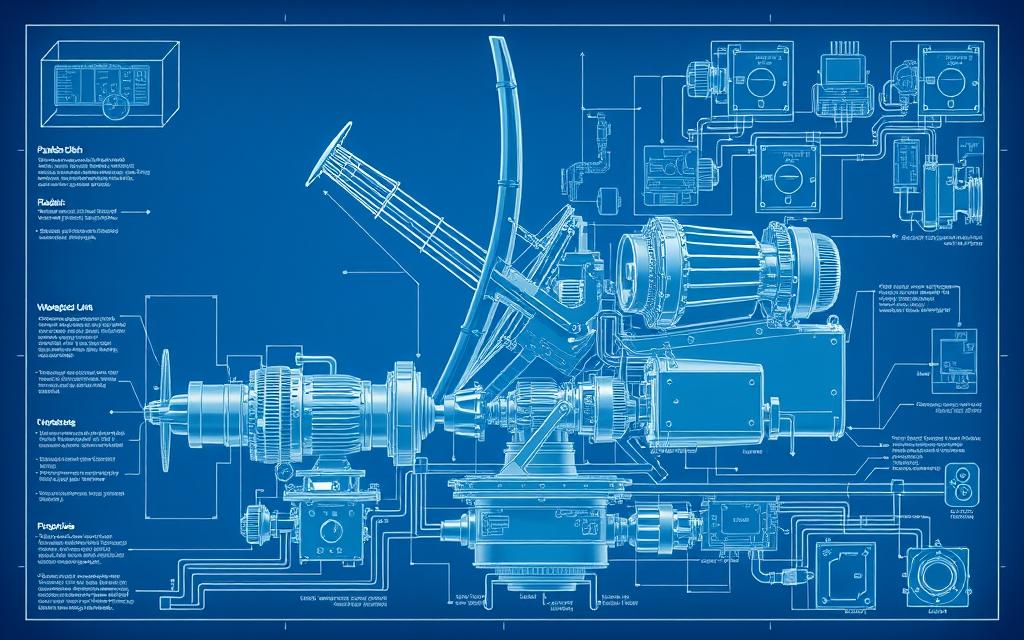
The antenna connects the radar system to the environment. It sends out signals and catches returning echoes. Most systems use one antenna for both tasks with a duplexer switch.
Parabolic Dish and Phased Array Designs
There are different antenna designs with their own benefits. Parabolic dish antennas focus beams well through mechanical rotation. Phased array systems steer beams electronically, allowing for quick scanning.
Receiver and Signal Processor
This part is key for detecting and understanding faint signals. The receiver boosts weak echoes and filters out noise and interference.
Amplification and Noise Filtering Techniques
Advanced signal processing is used to get useful data from signals. Modern systems use digital processing to separate targets from background and find their details.
| Component | Primary Function | Key Technologies | Performance Impact |
|---|---|---|---|
| Transmitter | Generate radio waves | Magnetron, Klystron | Determines power and range |
| Antenna | Transmit/receive signals | Parabolic, Phased Array | Affects beam direction and focus |
| Receiver/Processor | Analyse returning signals | Digital filtering | Influences detection accuracy |
Knowing about these key radar components helps us understand their detection abilities. For more on radar, see the detailed guide on how radar works by meteorological experts.
How Does Radar Technology Work: The Detection Process
Radar systems turn energy into useful information through a key process. This process has three main steps. These steps work together to find and describe targets accurately.
Transmission of Radio Wave Pulses
Radar systems send out short, strong radio waves instead of constant ones. These waves are made by special parts like magnetrons or klystrons. They send out these pulses into the air.
Each pulse lasts from microseconds to milliseconds. This short time helps measure things precisely and saves energy.
Pulse Repetition Frequency and Duration
The frequency of these pulses is called Pulse Repetition Frequency (PRF). It affects how far away the radar can see. A higher PRF means better speed tracking but shorter range.
Designers pick the right PRF and pulse length for each job. For example, weather radar like the WSR-88D needs the right settings for range and speed.
Signal Reflection from Target Objects
When pulses hit objects, some of the energy bounces back. This is how radar finds things. The amount of energy that comes back depends on the target and the pulse.
Different things reflect waves in different ways. Metal reflects well, while wood or plants reflect less. The angle of the pulse also matters.
Radar Cross-Section and Reflectivity Factors
Radar Cross-Section (RCS) shows how easy it is to spot an object with radar. It depends on size, shape, material, and how it faces the radar. Big objects with straight sides reflect more.
Many things affect how well something reflects:
- What it’s made of and its electrical properties
- Its shape and how it’s angled
- Its size compared to the wave
- How rough or detailed its surface is
Echo Reception and Signal Analysis
The radar antenna catches the signals that bounce back. These signals are very weak. Special receivers boost them up without losing quality.
Advanced computers then look at these signals. They remove noise, find real signals, and figure out where and how fast things are moving. This turns raw data into useful information.
Doppler Effect for Velocity Measurement
Doppler radar finds out how fast things are moving by looking at frequency changes. When something moves, it changes the frequency of the reflected wave. This lets radar systems calculate speed.
The WSR-88D is a top example of Doppler radar. It measures how fast things are coming or going by looking at signal changes. This is done through complex processing of pulses.
Doppler radar is used for many things:
- Tracking storms in weather
- Watching aircraft speed and direction in flying
- Measuring car speeds in traffic control
- Finding fast-approaching dangers in defence
Different Types of Radar Systems
Radar technology has grown into many types, each for different needs and places. Knowing these types helps pick the right one for a job.
Pulse Radar vs Continuous Wave Radar
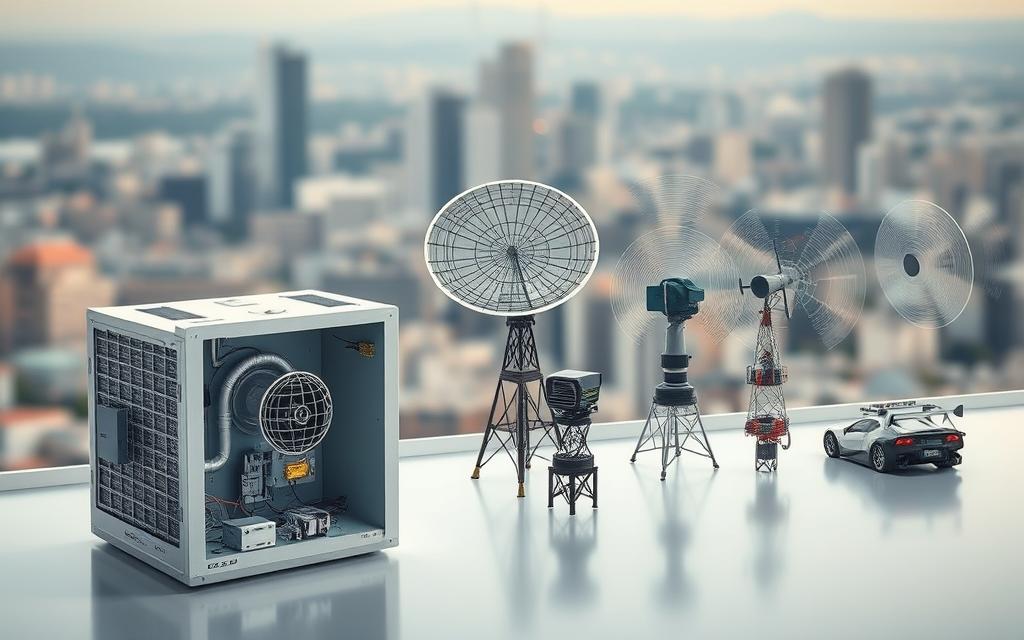
Pulse radar is common because it’s easy to use. It sends out short, strong radio waves and waits for echoes. This way, it can get clear signals without interference.
Continuous wave (CW) radar sends out a constant signal. It measures changes in the signal’s frequency to find velocity. This method is very accurate for speed.
Comparative Advantages and Limitations
Pulse radar is great for measuring distance and detail. It can see far away because of its high power. But, it can’t see very close things because of its short pulses.
CW radar is better at measuring speed and can see close things. It uses less power and is simpler. But, it’s hard to separate the signal it sends out from the one it gets back.
“The choice between pulse and continuous wave radar depends on what you need most: measuring distance or tracking speed.”
| Characteristic | Pulse Radar | Continuous Wave Radar |
|---|---|---|
| Range Measurement | Excellent | Limited |
| Velocity Measurement | Moderate | Excellent |
| Power Consumption | High peak power | Lower continuous power |
| Minimum Range | Limited by pulse width | Very short ranges possible |
| System Complexity | Moderate | Simpler design |
Primary Radar vs Secondary Radar
Primary radar is the usual kind. It sends out signals that bounce off targets and come back. It works with both willing and unwilling targets.
Secondary radar talks to targets directly. It asks them questions and gets answers back. This makes the information more accurate and reliable.
Cooperative Target Identification Systems
Secondary surveillance radar (SSR) is key for air traffic control. It uses transponders on planes to get information like:
- Aircraft identification codes
- Altitude data
- Emergency status indicators
- Additional flight information
This way, it’s easier to manage the skies and keep everyone safe.
Monostatic and Bistatic Radar Configurations
Monostatic radar is the most common. It has the transmitter and receiver in the same place. This makes it simple and reliable for most uses.
Bistatic radar is different. It has the transmitter and receiver far apart. It’s good for special jobs, like in the military.
Transmitter and Receiver Placement Strategies
For bistatic radar, where to put the transmitter and receiver matters a lot. You need to think about:
- How far apart they should be
- How to hide them from view
- What area they need to cover
- How to keep the signals in sync
This setup is great for finding stealthy targets. It also works well in places where direct signals can’t get through.
Now, some radars use more than one transmitter and receiver. These systems cover more ground and track targets better with advanced tech.
Signal Processing and Data Interpretation
After radar systems capture raw echo data, signal processing turns this into useful information. This step is key. It separates important target data from background noise and interference. This makes accurate detection and analysis possible.
Range Calculation Methods
One of radar’s main jobs is figuring out how far away objects are. Modern systems use precise timing to measure how long radio waves take to get to targets and come back.
Time-of-Flight Measurement Techniques
The time-of-flight method is at the heart of range finding in radar. Systems use the formula: Range = (Speed of Light × Time Delay) ÷ 2. This formula works because it counts the round trip of radio waves.
Advanced radar systems have super-accurate clocks and timers. They can spot nanosecond differences. This means they can measure distances with centimetre accuracy, even for fast-moving targets.
Target Identification and Classification
Today’s radar systems can do more than just detect objects. They can tell different types of objects apart. This target classification skill turns basic detection into smart recognition.
Signature Analysis and Pattern Recognition
Every object has a unique radar signature. This depends on its size, shape, material, and how it moves. Advanced systems use complex algorithms to compare incoming data with known patterns.
Modern radar uses machine learning to get better at recognizing things. It can tell apart aircraft, birds, weather, and different vehicles. It learns from each detection, getting better over time.
Clutter Reduction and Noise Management
Radar systems face big challenges, like unwanted echoes from terrain and weather. Good clutter filtering helps separate real targets from background noise.
Digital Signal Processing Algorithms
Advanced digital algorithms are key to managing clutter. They use various methods to improve signal quality:
- Doppler filtering separates moving targets from stationary clutter
- Adaptive filtering adjusts parameters based on environmental conditions
- Statistical analysis identifies patterns inconsistent with background noise
- Machine learning algorithms recognise subtle differences between targets and clutter
Today’s systems can pull out useful info from very noisy places. This is really helpful in tough conditions where old radar might fail.
The use of artificial intelligence has changed radar signal processing. These smart systems not only filter out noise but also predict how targets will behave. They adjust their strategies in real-time based on changing conditions.
Applications Across Various Sectors
Radar technology is not just about tech; it’s everywhere in our lives. It keeps us safe on the roads and in the skies. It’s a key part of our modern world.
Aviation and Air Traffic Control Systems
Radar is vital for keeping air travel safe. It helps controllers and pilots stay aware of their surroundings. This is done by tracking planes in real-time over huge areas.
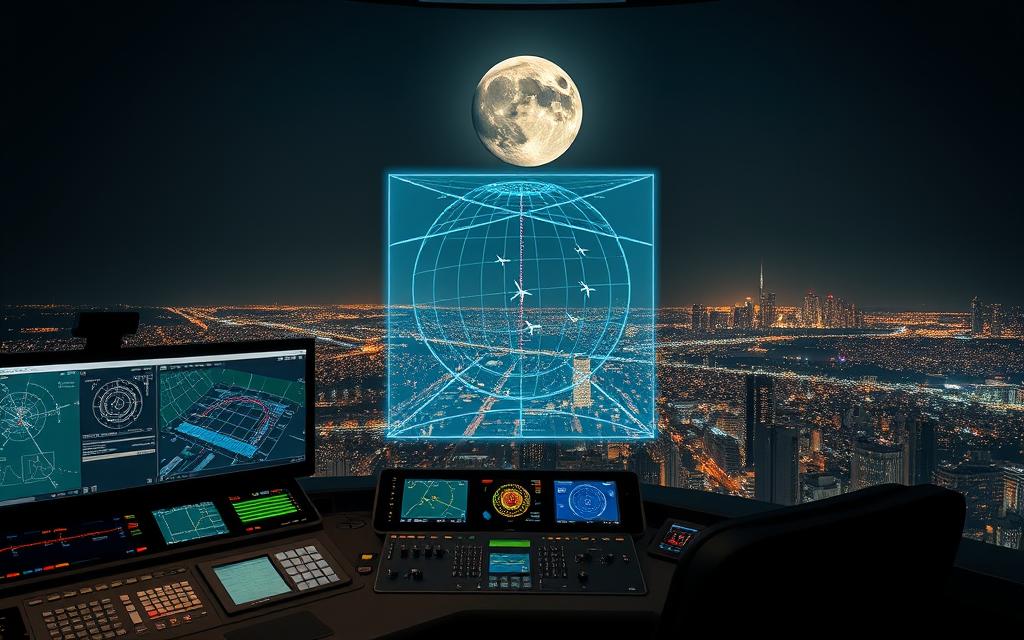
Big airports use air traffic control radar to keep everything running smoothly. They have systems like the ASR-9 and ASR-11. These can spot planes up to 60 nautical miles away, even if they’re not sending out signals.
These systems also have special filters to cut out background noise. This makes it easier to see planes clearly. The FAA keeps updating these systems to handle more planes safely.
Maritime Navigation and Collision Avoidance
At sea, radar is a lifeline when it’s hard to see. It helps all kinds of boats stay safe. From small yachts to huge cargo ships, radar is essential.
Marine Radar Systems and Regulations
Marine radar must meet strict rules set by the International Maritime Organisation. These rules make sure all ships can be seen clearly. This is important for safety at sea.
New radar systems show more than just where ships are. They also show where they’re going and if there’s a risk of collision. Some even show data from automatic identification systems.
Meteorological Applications
Weather radar has changed how we understand the weather. It helps predict the weather and study it over time. This is a big deal for meteorologists.
Weather Radar for Precipitation Monitoring
The NEXRAD network is top-notch for weather monitoring in the US. It uses Doppler radar to track storms and rain. This helps meteorologists give accurate forecasts.
These systems can spot storms that might turn into tornadoes. They can even tell the difference between rain, snow, and hail. This makes weather forecasts more accurate.
Military and Defence Applications
Radar is key in defence, from warning systems to targeting. It’s come a long way from World War II. It’s now a cornerstone of military strategy.
Surveillance and Targeting Systems
Today’s military radar does a lot, from watching the horizon to guiding missiles. The AN/TPY-2 radar can spot missiles from far away. This is a big help in defence.
Fire-control radars help artillery and missiles hit their mark. They can track many targets at once. They’re also good at avoiding enemy tricks.
Limitations and Challenges in Radar Technology
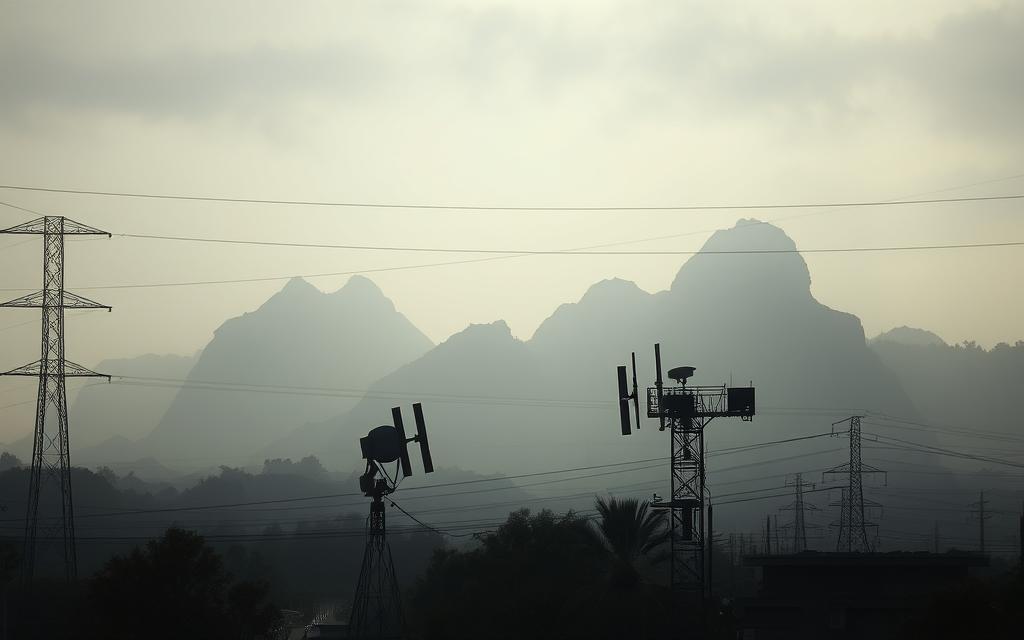
Radar technology faces many challenges, from weather interference to physical limits. These issues are key when using radar for important tasks.
Environmental Factors Affecting Performance
Radar systems work in complex weather conditions. These can make their performance drop.
Atmospheric Conditions and Interference
Weather like fog and rain doesn’t block radio waves. But, some frequencies get affected by water vapour and gases.
Designers pick safe frequencies to keep systems working well. Rain and gases can reduce range and cause errors.
“The atmosphere acts as both medium and obstacle for radar signals, requiring sophisticated compensation techniques for accurate detection.”
| Environmental Factor | Impact on Radar Performance | Mitigation Strategies |
|---|---|---|
| Heavy Rainfall | Signal attenuation up to 10dB/km | Frequency selection, signal processing |
| Atmospheric Ducting | Abnormal propagation paths | Adaptive beam forming |
| Ionospheric Interference | Signal distortion at long ranges | Frequency hopping techniques |
| Humidity Effects | Water vapour absorption | Dry air pressurisation systems |
Stealth Technology and Countermeasures
Modern military tech aims to avoid radar detection. This makes it hard for traditional radar systems.
Radar Absorbent Materials and Design
Radar absorbent material (RAM) uses special materials to absorb radar waves. This turns the energy into heat, not reflected back.
Vehicle design also helps by shaping surfaces to deflect radar waves. This makes it harder to detect the vehicle.
Resolution and Accuracy Constraints
Radar systems have limits in what they can show and measure. These limits affect their ability to see details and make accurate measurements.
Technical Limitations in Target Discrimination
The size of the antenna and the wavelength limit how well radar can see. Smaller antennas at longer wavelengths can’t separate close targets well.
Range resolution depends on the pulse and signal processing. Modern tech uses pulse compression to improve this, but there are limits.
Doppler resolution affects how well radar can measure speed, mainly for slow-moving targets. This is an area where radar tech is being improved.
Conclusion
Radar systems are a big step forward in detection tech. They use radio waves to spot objects and figure out their speed and direction. This summary shows how vital they are in many areas, like keeping planes safe and predicting the weather.
The key parts – transmitter, antenna, and receiver – work together. They send out pulses, catch the echoes, and decode the signals. This lets us accurately measure what’s out there, as explained in how radars work through microwave energy and echoes.
Looking ahead, radar tech is set to get even better. New digital signal processing and phased array tech will improve its accuracy and range. These updates will help in making cars drive themselves and in better weather forecasting.
Despite the hurdles like interference and stealth tech, radar keeps proving its worth. It’s always being improved to stay a key player in finding our way, keeping us safe, and helping us learn about the world.