

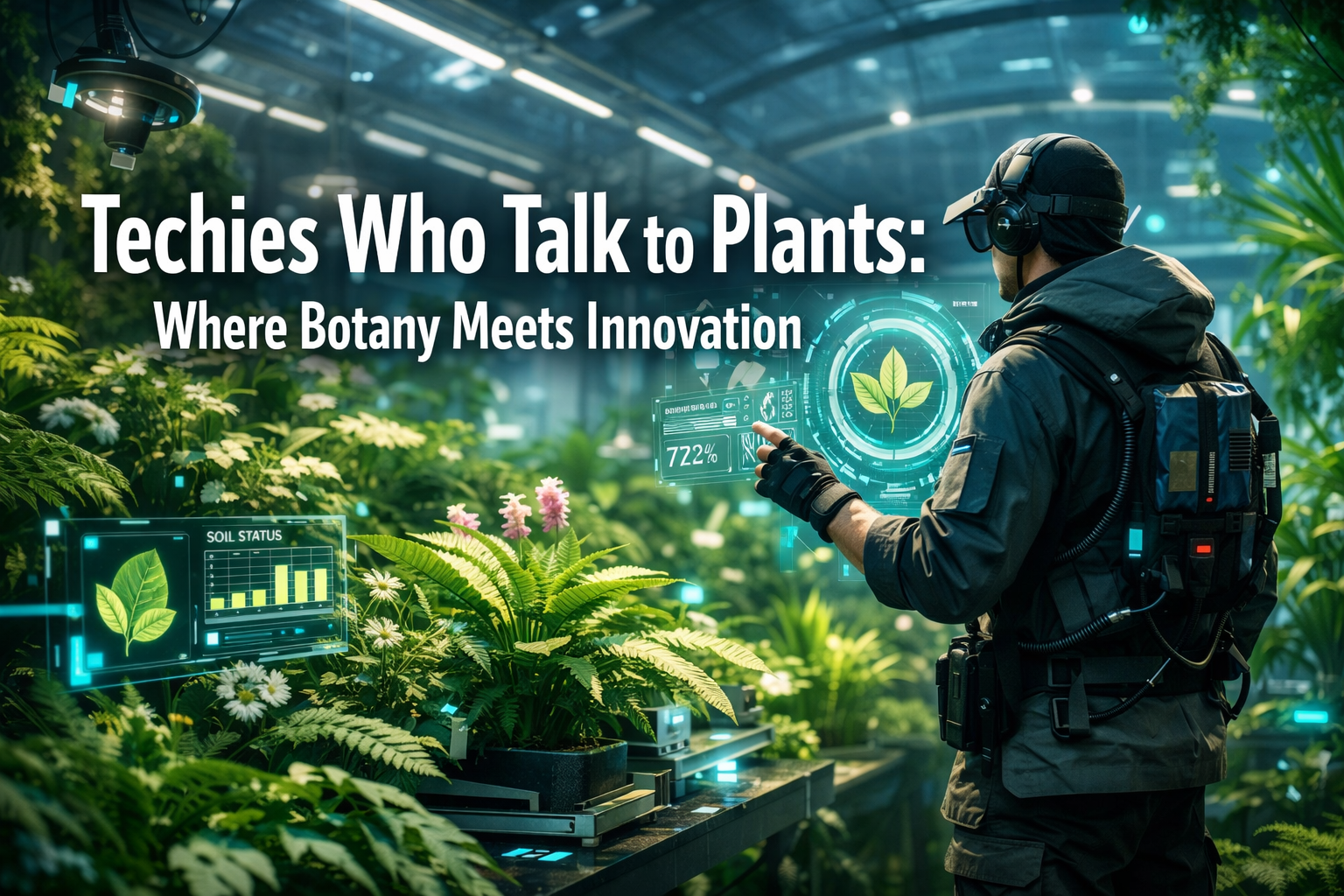
Imagine a world where plants don’t just grow silently, but actively communicate their needs, their stresses, and even their well-being directly to us. This isn’t science fiction; it’s the rapidly evolving reality powered by Techies Who Talk to Plants. This exciting field is blurring the lines between the natural world and cutting-edge innovation, promising revolutionary advancements in agriculture, environmental conservation, and even our personal connection with nature. From intricate sensor networks monitoring every leaf to AI algorithms deciphering subtle botanical signals, technology is opening up unprecedented dialogues with the plant kingdom in 2026.
Key Takeaways
- Bridging Disciplines: The field of “Techies Who Talk to Plants” unites botany, engineering, data science, and AI to understand and interact with plants in novel ways.
- Advanced Sensing: Sophisticated sensors are now capturing minute details about plant health, soil conditions, and environmental factors, providing real-time data.
- Data-Driven Insights: AI and machine learning algorithms are crucial for interpreting the vast amounts of data collected, translating complex biological signals into actionable information.
- Applications Across Sectors: This intersection drives innovation in precision agriculture, smart gardening, climate change mitigation, and bioremediation.
- Future Potential: The ongoing research and development in this area promise sustainable solutions for global food security, ecological monitoring, and a deeper human-plant connection.
Decoding Plant Communication: The Foundation for Techies Who Talk to Plants
For centuries, humans have observed plants, intuiting their needs through visual cues and traditional knowledge. However, the modern era, particularly in 2026, has ushered in a new chapter, one where technology allows us to move beyond mere observation to active interpretation. The concept of Techies Who Talk to Plants is built on the premise that plants, though lacking a nervous system, exhibit complex physiological responses to their environment. These responses can be measured, analyzed, and understood with the right tools.
The Language of Leaves: Biophysical Signals
Plants are constantly generating a wealth of biophysical signals that act as their silent language. These include:
- Electrical Signals: Plants produce weak electrical currents in response to stimuli like touch, light changes, and even pest attacks. These signals are analogous to nerve impulses in animals, albeit much slower.
- Chemical Emissions (VOCs): Volatile Organic Compounds (VOCs) are chemical scents released by plants, often as a defense mechanism or to attract pollinators. These “smells” can indicate stress, disease, or ripeness.
- Turgor Pressure & Water Potential: The internal water pressure within plant cells directly impacts their rigidity and health. Fluctuations here signal thirst or environmental stress.
- Photosynthetic Activity: The rate at which a plant converts light into energy is a key indicator of its vitality and nutrient status.
Understanding and capturing these subtle cues is the first step for Techies Who Talk to Plants in establishing a dialogue.
Early Innovations: Paving the Way
While the current advancements seem futuristic, the journey began with simpler, yet foundational, technologies. The development of basic pH meters, moisture sensors, and light meters laid the groundwork. As technology progressed, so did our ability to gather more nuanced data. The miniaturization of electronics and advances in sensor technology have been crucial. Learn more about the greatest technological achievements and innovations that shaped the world that have led us to this exciting point.
The Toolkit of Techies Who Talk to Plants: Sensors, AI, and Robotics
The modern “conversations” with plants are facilitated by an impressive array of technological marvels. These tools are the ears and brains that allow Techies Who Talk to Plants to interpret botanical messages and respond appropriately.
Advanced Sensor Technologies
The heart of plant-to-human communication lies in sophisticated sensor networks. These aren’t just simple thermometers; they are precision instruments capable of detecting a multitude of plant and environmental parameters.
| Sensor Type | What it Measures | Why it Matters for Plants |
|---|---|---|
| Electrical Potential | Bio-electrical signals, changes in voltage | Stress response, internal communication, growth patterns |
| Hyperspectral Imaging | Light reflectance across many wavelengths | Nutrient deficiencies, disease detection, water stress |
| Thermal Cameras | Plant surface temperature | Transpiration rates, early detection of water stress or disease |
| Acoustic Sensors | Sounds produced by cavitation (water stress), insect activity | Severe water deprivation, pest presence |
| Gas Sensors | VOCs, ethylene, CO2 levels | Ripening, disease presence, stress signals |
| Soil Sensors | Moisture, pH, nutrient levels (N, P, K) | Root health, water availability, nutrient uptake |
These sensors, often wirelessly connected, form a complex web of data collection points, providing a real-time health dashboard for individual plants or entire fields.
Artificial Intelligence and Machine Learning: The Translators
Collecting data is only half the battle. The sheer volume and complexity of information generated by plant sensors require powerful analytical tools. This is where Artificial Intelligence (AI) and Machine Learning (ML) shine. For Techies Who Talk to Plants, AI acts as the translator, processing raw data into actionable insights.
Related Posts:






- Pattern Recognition: AI algorithms can identify subtle patterns in plant data that might be imperceptible to humans. For instance, a particular combination of electrical signals and VOC emissions might signify the onset of a specific disease days before visual symptoms appear.
- Predictive Analytics: By analyzing historical data and current conditions, AI can predict future plant needs, such as optimal watering schedules, fertilization requirements, or even harvest times.
- Automated Response: In advanced systems, AI can even trigger automated responses, such as adjusting irrigation systems, deploying targeted pest control, or regulating greenhouse climates. This level of automation is transforming how we manage crops and gardens, as explored in articles about how to use technology to stay organized.
“The future of farming isn’t about more labor, but smarter labor. Robotics and AI allow us to give each plant individual attention, at scale, transforming our approach to food production.”
Robotics and Automation: The Hands-On Helpers
Robotics is increasingly playing a vital role, especially in large-scale agricultural settings. Drones equipped with hyperspectral cameras can scan vast fields, identifying problem areas. Ground-based robots can perform precision tasks like targeted irrigation, weeding, or even harvesting delicate crops based on AI-driven insights from plant data. This integration of robotics with advanced sensing and AI is a cornerstone for modern Techies Who Talk to Plants.
Real-World Applications: Where Techies Who Talk to Plants Make a Difference
The practical applications of this interdisciplinary field are vast and impactful, addressing some of the most pressing challenges of 2026, from food security to climate change.
Precision Agriculture: Growing Smarter, Not Harder
Perhaps the most significant impact of Techies Who Talk to Plants is in agriculture. Precision agriculture leverages technology to optimize crop yields while minimizing resource use.
- Optimized Irrigation: Instead of blanket watering, sensors tell farmers exactly when and where individual plants or zones need water, reducing waste by up to 50%.
- Targeted Fertilization: Nutrient sensors and AI analysis ensure that fertilizers are applied only where necessary, preventing overuse, runoff, and environmental damage.
- Early Disease and Pest Detection: By monitoring biophysical signals and VOCs, farmers can detect diseases and pests in their nascent stages, allowing for swift, targeted interventions rather than widespread pesticide application. This reduces crop loss and chemical use.
- Yield Prediction: Accurate yield predictions help farmers plan harvests, manage logistics, and reduce post-harvest waste.
This move towards hyper-efficient farming is critical in a world with a growing population and finite resources.
Smart Gardens and Urban Farming: Bringing Greenery to the City
The principles applied in large-scale agriculture are also being scaled down for urban environments and home use. Techies Who Talk to Plants are designing smart garden systems that make gardening accessible even to those without a green thumb.
- Automated Plant Care: Self-watering planters with integrated sensors communicate with smartphone apps, informing users when to refill water or add nutrients, and even adjusting light cycles.
- Vertical Farms: Urban vertical farms use hydroponics or aeroponics, combined with sensor arrays and AI, to grow food in controlled, space-efficient environments, reducing the need for extensive land and long-distance transportation.
- Personalized Plant Advice: Apps connected to smart planters can offer personalized care advice based on the specific plant species and its real-time data, democratizing botanical knowledge.
These innovations are transforming how we interact with plants in our daily lives, making every home a potential mini-farm. You can also explore how these smart systems relate to Gira in technology and smart home systems.
Environmental Monitoring and Conservation: Guardians of the Green
Beyond agriculture, the insights gained from talking to plants are invaluable for environmental protection.
- Forest Health Monitoring: Networks of sensors in forests can detect early signs of drought stress, pest infestations, or disease outbreaks, allowing for timely interventions to protect vital ecosystems.
- Climate Change Research: By monitoring plant responses to changing environmental conditions (temperature, CO2 levels), scientists can better understand the impact of climate change and predict future ecological shifts.
- Bioremediation: Plants are natural filters, capable of absorbing pollutants from soil and water. Monitoring their health and stress levels with technology can optimize their performance in bioremediation projects.
The ability for Techies Who Talk to Plants to listen to the silent sentinels of our environment provides crucial data for conservation efforts in 2026.
Health and Wellness: The Therapeutic Power of Plants
Emerging applications are exploring the connection between plants and human well-being. Devices that monitor specific plant signals are being developed for therapeutic settings. For example, some studies suggest that certain plant signals can influence mood or indicate changes in the surrounding environment that impact human health. This fascinating avenue of research could unlock new dimensions of plant-assisted therapy.
Challenges and Ethical Considerations for Techies Who Talk to Plants
While the promise is immense, the field is not without its hurdles and ethical questions.
Technical Limitations and Data Overload
- Sensor Accuracy and Longevity: Ensuring the long-term accuracy and durability of sensors in harsh outdoor environments remains a challenge.
- Interpreting Nuance: Plant communication is incredibly nuanced. Distinguishing between a normal physiological change and a stress signal requires highly sophisticated algorithms and extensive training data.
- Standardization: A lack of standardized protocols for data collection and analysis can hinder interoperability between different systems.
Ethical and Societal Impact
- Data Privacy: While perhaps not immediately obvious, large-scale data collection on agricultural operations could raise questions about data ownership and potential misuse.
- Technological Divide: Ensuring that these advanced technologies are accessible to small-scale farmers and developing nations is crucial to prevent exacerbating existing inequalities.
- Defining “Consciousness”: As we gain deeper insights into plant communication, it sparks philosophical debates about plant sentience and our ethical obligations towards them. While plants don’t possess consciousness in the human sense, understanding their complex responses might shift our perception.
These challenges require ongoing collaboration between scientists, engineers, policymakers, and ethicists to navigate responsibly as we continue to empower Techies Who Talk to Plants.
The Future of Botanical Technology in 2026 and Beyond
The trajectory of this field is undeniably upward. In 2026, we are witnessing an accelerating pace of innovation, driven by advancements in several key areas.
Miniaturization and Integration
Expect even smaller, more pervasive sensors that can be seamlessly integrated into plant structures or soil. This includes biodegradable sensors that break down naturally after their lifespan, reducing environmental impact. The integration of quantum sensing technologies may allow for even more precise detection of subtle biophysical changes at a cellular level.
Advanced AI and Digital Twins
AI will become even more sophisticated, moving beyond mere pattern recognition to truly understand the complex interplay of plant biology and environmental factors. The creation of “digital twins” – virtual replicas of individual plants or entire crops – will allow for predictive modeling, scenario testing, and optimized decision-making in real-time. This concept aligns with advanced simulation and modeling techniques discussed in areas like how technology has impacted oceanography.
Bioremediation and Climate Resilience
The role of Techies Who Talk to Plants in combating climate change will expand. We will see more robust systems for monitoring carbon sequestration by plants, optimizing plant-based solutions for pollution control, and developing climate-resilient crop varieties that can thrive in challenging conditions, informed by direct communication with the plants themselves.
Education and Public Engagement
As these technologies become more accessible, there will be a greater emphasis on educating the public, from school children to home gardeners, about how to understand and interact with their botanical companions using technology. This will foster a deeper appreciation for the natural world and encourage sustainable practices. The insights gained from plant-tech could revolutionize environmental education.
Conclusion: A Greener Tomorrow, One Conversation at a Time
The fascinating world of Techies Who Talk to Plants is not just about gadgets and algorithms; it’s about fostering a profound connection and understanding with the very basis of our ecosystem. By leveraging the power of technology, we are moving beyond simply observing plants to actively listening to their needs, stresses, and vital signals. This intersection of botany and technology is proving to be a fertile ground for innovation, offering sustainable solutions to some of humanity’s most pressing challenges in 2026.
From optimizing food production to safeguarding our environment and enhancing our daily lives, the silent language of plants is finally being heard, translated, and acted upon. As this field continues to evolve, we can look forward to a future where humans and the plant kingdom communicate in harmony, leading to a healthier, more sustainable planet for all. The journey has just begun, and the conversations with our green companions are becoming richer and more insightful with each passing year.
Actionable Next Steps:
- Explore Smart Gardening: Consider investing in a smart planter or a basic sensor kit for your home garden to start understanding plant needs firsthand.
- Stay Informed: Follow research institutions and tech companies focusing on agricultural tech and botanical sensing to keep up with the latest innovations.
- Support Sustainable Agriculture: Look for produce grown using precision agriculture techniques, contributing to more efficient and environmentally friendly farming practices.
- Engage in STEM Education: Encourage interest in botany, engineering, and data science among younger generations to cultivate the next wave of Techies Who Talk to Plants.
- Reflect on Our Connection: Take time to appreciate the complex life of plants and how technology can deepen our understanding and respect for them.
Frequently Asked Questions (FAQ)
The core idea is to bridge the gap between botany and technology, using advanced sensors, AI, and robotics to understand and interact with plants’ biophysical signals and needs. It’s about ‘listening’ to plants to optimize their growth and well-being.
Plants communicate through various biophysical signals, including electrical impulses, chemical emissions (Volatile Organic Compounds or VOCs), changes in turgor pressure (water potential), and fluctuations in photosynthetic activity. Technology helps detect and interpret these subtle cues.
AI and Machine Learning algorithms are crucial for processing the vast amounts of data collected from plant sensors. They translate complex biological signals into actionable insights, identify patterns, predict future plant needs, and can even trigger automated responses like irrigation adjustments.
In 2026, the main applications include precision agriculture (optimized irrigation, targeted fertilization, early disease detection), smart gardens and urban farming, environmental monitoring and conservation (forest health, climate change research), and emerging applications in health and wellness.
Future trends include further miniaturization and integration of sensors (e.g., biodegradable sensors), more advanced AI for ‘digital twins’ of plants, expanded roles in bioremediation and climate resilience, and increased public engagement through accessible educational tools.
How to Get Started with Smart Gardening for Plant Communication
Choose a Smart Plant Sensor Kit
Select a kit that monitors essential parameters like soil moisture, light, and temperature. Many kits are available online and from garden centers in 2026. Look for models with easy app integration.
Install Sensors According to Instructions
Carefully place the soil probe into the soil of your potted plant and position light/temperature sensors as recommended. Most kits provide clear visual guides for installation. Ensure the sensors are securely placed but not damaging the plant.
Connect to the Companion App
Download the kit’s dedicated app on your smartphone or tablet. Follow the app’s prompts to pair your sensors via Bluetooth or Wi-Fi. This will establish the data link between your plant and your device.
Monitor Plant Data and Receive Alerts
Once connected, the app will start displaying real-time data on your plant’s health. Pay attention to moisture levels, light exposure, and temperature. The app will often send alerts when your plant needs watering or has other immediate needs.
Respond to Your Plant’s Needs
Use the data and alerts from the app to inform your plant care. Water when the moisture level drops, adjust lighting if necessary, or move the plant if temperatures are extreme. This active response is how you begin to ‘talk back’ to your plant.
Key Term Definitions
An agricultural approach that uses technology to precisely manage inputs like water, fertilizer, and pesticides based on real-time data from crops, aiming to optimize yields and minimize resource waste. This is a core application for Techies Who Talk to Plants.
Organic chemical compounds that have high vapor pressure at ordinary room temperature. Plants release specific VOCs often as a defense mechanism, to attract pollinators, or to signal stress or disease. These are key signals monitored by Techies Who Talk to Plants.
A virtual representation or simulation of a physical object, system, or process. In the context of plants, a digital twin would be a virtual replica of an individual plant or an entire crop, created using real-time sensor data, allowing for predictive modeling and optimized management. This is a cutting-edge concept utilized by advanced Techies Who Talk to Plants.