

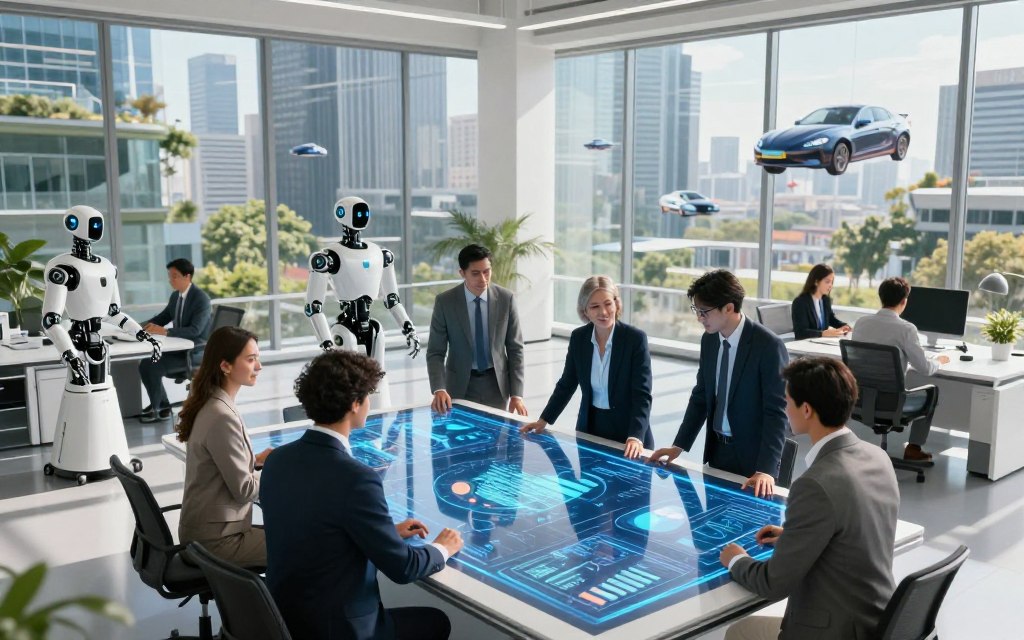
The future of work is becoming important to leaders and employees as technology changes daily work. Digital transformation affects how companies operate and how teams collaborate. This change includes remote and hybrid work, data-driven management, and new leadership styles.
Organizations must balance efficiency with human judgment while protecting employee well-being, privacy, and inclusion. Technology and the workplace are becoming more digital, so professionals must build new skills. Tech literacy now matters across many sectors more than ever.
This article explains how technology is changing work and organizations, including emerging technologies and career development. It also examines ethics as technology changes careers and work processes. Understanding these trends helps leaders and employees prepare for future challenges and opportunities.
Key Takeaways
- The future of work includes remote and hybrid models, reshaping traditional roles.
- Digital transformation is critical for organizational success and employee engagement.
- Tech literacy is essential for all professionals in today’s workplace.
- Balancing efficiency with human judgment is key to fostering a positive work environment.
- Continuous learning is necessary to keep pace with technological advancements.
- Ethical considerations must be addressed as technology integrates deeper into work processes.
- For more insights on effective communication in tech, check out this guide.
The Evolving Workplace Landscape
The workplace is changing in major ways. Today, the modern workplace offers flexibility and strong connections.
Employees can work from homes, coworking spaces, or while traveling, rather than staying in traditional offices. This shift changes how organizations work with their employees.
Technology plays a key role in this workplace transformation. The integration of cloud computing, mobile devices, and collaboration platforms has changed access and productivity expectations. Real-time data helps employees make informed decisions quickly, improving response times and efficiency.
Defining the Modern Workplace
The digital workplace involves more than technology. It also creates a cultural shift within organizations and supports flexible work arrangements. These arrangements help employees balance personal and professional lives, while satisfied workers support productivity and innovation.
As we define the modern workplace, we should consider these key aspects:
- Flexibility: Employees can choose when and where to work.
- Collaboration: Tools that facilitate teamwork across different locations.
- Inclusivity: A focus on diverse work styles and needs.
Key Drivers of Workplace Transformation
Several factors drive workplace transformation today. Organizations must understand these forces to adapt, support organizational change, and thrive.
Related Posts:





- Changing Employee Expectations: Workers now seek more autonomy and flexibility in their roles.
- Competitive Pressure: Organizations must innovate to stay ahead in a rapidly evolving market.
- Advances in Artificial Intelligence: AI tools streamline processes and enhance decision-making.
- Cybersecurity Requirements: Protecting data has become paramount as remote work increases.
- Global Talent Access: Companies can hire the best talent regardless of location.
- Need for Faster Decisions: Real-time data access enables quicker responses to market changes.
Workplace transformation requires more than a technology upgrade. Organizations must align systems, workflows, culture, training, and leadership practices. This approach helps new tools support measurable business goals and deliver a consistent employee experience.
“The future of work is not about where you work, but how you work.”
How Technology Is Changing Work and Organizations
In today’s fast-paced business environment, organizations must adapt to survive. The digital transformation imperative now shapes how companies work. Companies redesign entire workflows to use connected technology, not just digitize processes.
The Digital Transformation Imperative
Digital transformation means more than adopting new tools; it requires a digital transformation strategy that supports company goals. This strategy improves operations, customer experiences, and competitiveness in a changing market. By linking technologies, companies create a smooth information flow that supports employees and drives innovation.
Impact on Business Operations
Technology is reshaping business operations. Integrated enterprise technology platforms connect finance, sales, customer service, supply chain, human resources, and operations. This connection improves teamwork and communication across the organization.
Operational Efficiency Gains
One major benefit of business operations technology is greater operational efficiency. Organizations can reduce manual work, simplify processes, and remove duplicate tasks. This results in several benefits:
- Faster processing times
- Improved resource allocation
- More consistent service delivery
These improvements save time and raise service quality. They also let companies focus on strategic goals instead of routine tasks.
Data-Driven Decision Making
Technology also supports data-driven decision-making. Analytics dashboards and predictive analytics help leaders spot trends, track performance, and forecast demand. Centralized data supports better investment reviews and strategic planning.
These technologies depend on data quality, good governance, and employee training. Teams must learn to interpret data correctly and make informed decisions. Human oversight remains vital for reliable results.
| Technology | Impact | Benefit |
|---|---|---|
| Cloud Systems | Improved accessibility | Enhanced collaboration |
| Workflow Automation | Reduced manual tasks | Increased efficiency |
| Analytics Dashboards | Real-time insights | Informed decision-making |
| Integrated Business Software | Streamlined operations | Cost savings |
In conclusion, technology changes more than how we work; it transforms organizations themselves. By embracing digital transformation, businesses can improve operational efficiency and make informed decisions that support success.
Automation and Artificial Intelligence in the Workplace
The integration of artificial intelligence at work is changing how businesses operate. With rising workplace automation, companies use AI-powered tools to boost productivity and streamline processes. These technologies handle repetitive, data-heavy, or precise tasks, giving employees more time for complex and creative work.
AI-Powered Tools and Applications
AI-powered tools are changing many functions within organizations. They range from customer support chatbots to advanced document analysis systems. For instance, AI can schedule meetings, forecast sales trends, and generate content.
Reshaping Job Functions
As AI evolves, job functions are changing. Instead of replacing workers, AI often strengthens their abilities. Employees supervise AI systems, interpret their results, and manage exceptions, creating closer teamwork between people and machines.
Roles Being Augmented by AI
Several roles benefit from AI support, increasing productivity. Analysts, marketers, recruiters, developers, healthcare administrators, and customer service professionals use intelligent assistance. These jobs are augmented by AI; for example, marketers analyze consumer behavior and create targeted campaigns for their audiences.
Roles Being Replaced by Automation
AI enhances many jobs, but it also creates challenges for some roles. Repetitive clerical, transactional, or rule-based tasks face the greatest risk, but entire professions are not disappearing. Workers must reskill and adapt to new technologies to remain relevant in the changing job market.
Companies must implement AI responsibly to ensure a smooth transition. They should monitor bias, explain changes clearly, and maintain human oversight. As automation and employment change, collaboration between humans and AI will remain vital for future success.
Remote Work and Hybrid Models
Remote and hybrid work models have changed how businesses manage flexibility and productivity. They have grown from temporary fixes into established practices for many organizations. Success depends on job needs, management, technology, and employee needs.
Organizations can choose fully remote, hybrid, office-first, or location-flexible models. Each model brings benefits and challenges shaped by industry, job function, and customer demands.
The Permanent Shift to Flexible Work
Flexible work gives companies wider access to talent. They can hire skilled professionals from many locations, strengthening their workforce. Employees gain more control over their work setting, which can improve satisfaction and productivity.
Other benefits include the following:
- Reduced commuting: Employees save time and costs associated with travel.
- Real estate flexibility: Organizations can downsize office spaces, reducing overhead costs.
These models also create challenges. Team coordination can become harder, and remote visibility may decline. New employees may need structured onboarding to join the company culture well.
Teams must provide equal access to opportunities and prevent unfair gaps. Clear rules for availability, documentation, and performance measures help build a cohesive flexible workplace.
Technology Enabling Distributed Teams
Technology supports remote work and hybrid work models. Tools and applications help distributed teams communicate and collaborate. Key technologies include:
| Technology Type | Purpose | Examples |
|---|---|---|
| Cloud-based Applications | Storage and sharing of documents | Google Drive, Dropbox |
| Video Conferencing | Real-time meetings and discussions | Zoom, Microsoft Teams |
| Instant Messaging | Quick communication | Slack, WhatsApp |
| Virtual Private Networks (VPN) | Secure remote access | NordVPN, ExpressVPN |
| Identity Management | Secure user access | Okta, OneLogin |
These tools improve collaboration and keep teams connected across locations. Asynchronous communication lets members work on their own schedules, supporting a better work-life balance in virtual work.
In conclusion, remote and hybrid work models have changed how organizations operate. These models offer major benefits, but success requires careful planning and the right remote work technology. For more insights on the challenges and opportunities of remote work, visit this link.
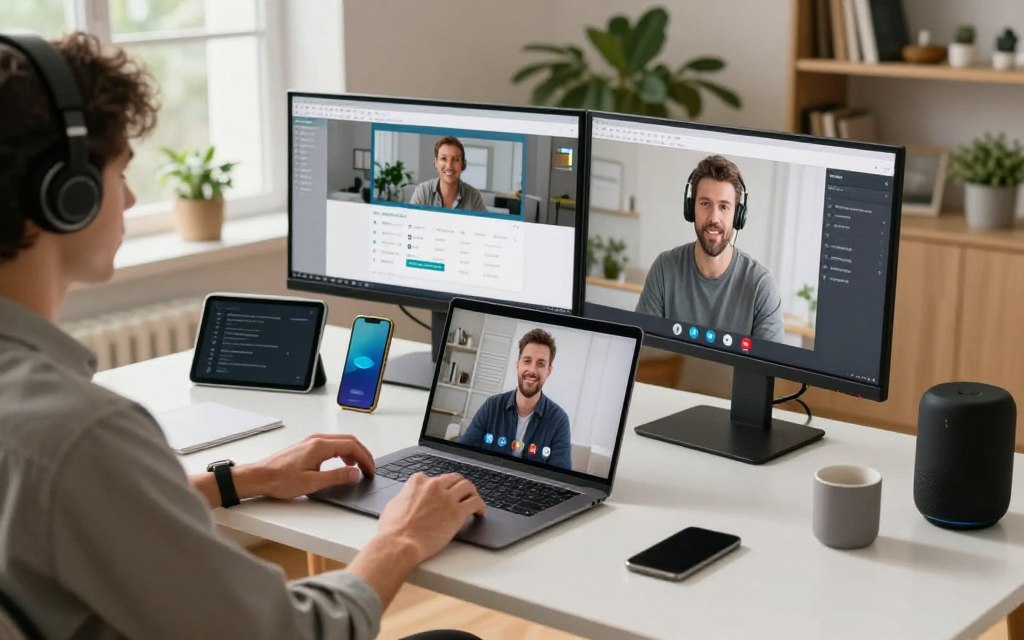
The Rise of Digital Collaboration Tools
Digital collaboration tools are now essential for organizations that want to succeed in today’s fast-paced work environment. They support clear communication and raise productivity, helping teams work well from any location.
Within communication platforms and virtual workspaces, several features help teams work together. Video meetings create face-to-face contact, while team messaging apps support real-time communication. Shared knowledge bases and collaborative documents give all members vital information; digital whiteboards and searchable resources support brainstorming and organization.
These tools also bring challenges. Notification overload can fragment information. Too many meetings may reduce productivity, while unclear communication rules can cause misunderstandings.
Organizations must manage these risks while using digital collaboration tools effectively.
Project Management and Productivity Solutions
Alongside communication platforms, project management software plays a key role in improving employee productivity. These employee productivity tools support task assignments, workflow boards, and calendars that streamline operations. Milestone tracking and resource planning help teams meet deadlines and manage workloads.
Document management systems keep important files organized and easy to access. Performance reporting helps organizations assess productivity and make informed decisions. Successful organizations choose tools for their business needs and integrate systems when possible, creating a cohesive workflow.
Usage standards help organizations get the most from these tools. They should protect sensitive information and review technology often, checking outcomes instead of activity alone.
| Tool Type | Key Features | Benefits |
|---|---|---|
| Communication Platforms | Video meetings, team messaging, shared documents | Enhances real-time collaboration |
| Project Management Software | Task assignments, milestone tracking, resource planning | Improves workflow efficiency |
| Employee Productivity Tools | Document management, performance reporting | Facilitates better decision-making |
New Career Paths and Skill Requirements
Technology keeps changing the job market and creates new chances for people who adapt. Digital tools and platforms are opening future career paths that require many skills. This shift affects new workers and changes roles for current professionals.
Emerging Roles in Tech-Driven Industries
Technology’s growth has created several emerging technology jobs. Here are some notable roles:
- Data Analysts: Professionals who interpret complex data to help businesses make informed decisions.
- Cloud Engineers: Specialists who manage cloud computing resources and services.
- Cybersecurity Specialists: Experts focused on protecting organizations from cyber threats.
- AI Product Managers: Individuals who oversee the development and implementation of AI-driven products.
- Automation Consultants: Advisors who help businesses automate processes to increase efficiency.
- User Experience Researchers: Professionals who study how users interact with products to improve usability.
- Privacy Professionals: Experts who ensure compliance with data protection regulations.
- Sustainability Technology Specialists: Individuals focused on integrating technology with sustainable practices.
- Digital Learning Designers: Creators of online learning experiences and educational content.
Essential Skills for the Future Workforce
Workers need technical skills and people skills to succeed in these roles. These future workforce skills include:
Technical Competencies
- Data Literacy: The ability to read, understand, and analyze data.
- Cybersecurity Awareness: Knowledge of security practices to protect information.
- Cloud and Software Fluency: Proficiency in using cloud services and software applications.
- Process Automation: Skills in automating repetitive tasks to enhance productivity.
- Digital Communication: Effective communication through digital channels.
- Responsible AI Usage: Understanding the ethical implications of AI technologies.
Soft Skills and Adaptability
Soft skills help workers handle the modern workplace. They also support adaptability in the workplace. Key soft skills include:
- Critical Thinking: The ability to analyze situations and make reasoned decisions.
- Communication: Clear and effective exchange of ideas and information.
- Collaboration: Working well with others to achieve common goals.
- Emotional Intelligence: Understanding and managing one’s emotions and those of others.
- Creativity: The ability to think outside the box and generate innovative solutions.
- Ethical Reasoning: Making decisions based on ethical considerations.
- Problem-Solving: Identifying issues and developing effective solutions.
- Comfort with Change: Adapting to new situations and challenges with ease.
Employers should create training paths that build these skills. Employees should build skills they can use across jobs. Together, these steps support resilience as work changes quickly.
Leadership and Organizational Restructuring
The landscape of technology leadership is changing as technology reshapes how organizations operate. Today’s leaders must integrate technology into their management practices.
This shift changes decision-making, accountability, and communication. As companies embrace digital transformation, leaders must rethink talent development and organizational design.
Modern leadership in tech-forward companies emphasizes transparency and cross-functional collaboration. Leaders should create workplaces where employees can safely raise concerns and suggest improvements. Psychological safety helps teams find system weaknesses and address ethical issues.
A leading business strategist noted:
“In a rapidly changing world, leaders must not only manage but also inspire innovation and adaptability.”
Modern Leadership Approaches in Tech-Forward Companies
Leaders today must use evidence-based planning and remain open to experimentation. By using data and feedback, they can turn technical investments into real business value.
This work requires continuous learning and adaptation. A focus on inclusive leadership ensures diverse perspectives shape decision-making.
Agile and Flat Organizational Structures
Agile organizations use small, cross-functional teams and shorter planning cycles. This model supports iterative delivery and faster responses to customer feedback.
Adopting flat organizational structures can improve collaboration, but management remains necessary. Clear priorities and measurable outcomes maintain accountability.
| Feature | Agile Organizations | Flat Organizational Structures |
|---|---|---|
| Team Size | Small, cross-functional | Broader roles with fewer levels |
| Decision-Making | Decentralized | Collaborative |
| Feedback Loop | Rapid and iterative | Direct and continuous |
| Focus | Customer-driven | Employee empowerment |
Effective technology leadership in the modern workplace requires understanding organizational restructuring and digital business strategy. Leaders must prioritize communication and workforce planning to support successful transitions during restructuring efforts.
Employee Experience and Well-being
In today’s fast-paced work environment, employee experience and workplace well-being are vital. Organizations invest in these areas to attract and retain talent. Employee experience technology supports workers from recruitment through ongoing development.
Technology for Employee Engagement
Employee engagement tools help build a positive workplace culture. These tools include:
- Pulse surveys that gauge employee sentiment.
- Employee portals that provide access to resources and information.
- Learning platforms that support continuous development.
- Recognition systems that celebrate achievements.
- Personalized resources and accessible feedback channels.
However, technology alone cannot create engagement or a strong digital employee experience. Employees also need trust, meaningful work, fair treatment, supportive managers, and chances to grow. Organizations must build this culture alongside their digital tools.
Balancing Productivity and Mental Health
Technology enhances productivity, but it can also cause digital overload, constant notifications, and meeting fatigue. These pressures can blur work and personal life, affecting productivity and mental health. Organizations can use several strategies to address these issues:
- Establish clear communication norms to reduce unnecessary interruptions.
- Encourage protected focus time to enhance concentration.
- Set realistic workloads to prevent burnout.
- Provide manager training to support team members effectively.
- Offer flexible scheduling options where feasible.
- Ensure confidential access to support resources for employees.
In the end, measure sustainable productivity by outcomes and employee health, not simple online presence. Organizations that prioritize workplace well-being can build a more engaged, productive workforce.
| Engagement Tool | Benefits | Considerations |
|---|---|---|
| Pulse Surveys | Quick feedback on employee sentiment | Must be acted upon to be effective |
| Employee Portals | Centralized access to resources | Requires regular updates and maintenance |
| Learning Platforms | Supports continuous development | Needs to align with employee goals |
| Recognition Systems | Boosts morale and motivation | Should be fair and transparent |
Challenges and Ethical Considerations
Technology in the workplace creates many ethical challenges. As organizations use more digital tools, they must protect privacy and data security. Understanding these issues supports ethical technology use and a responsible workplace.
Privacy and Data Security Concerns
As technology grows, workplace privacy faces new threats. Organizations must address unauthorized access, data breaches, and algorithmic bias. To reduce these risks, companies must prioritize data security in organizations with strong safeguards.
Collecting only necessary information and limiting access to sensitive data are vital steps. Securing devices and applications helps block threats, while employee training improves data handling. Regular records and fair, accurate reviews of automated systems support transparency and accountability.
Bridging the Digital Divide
The digital divide shows gaps in broadband access, device availability, and digital skills. Many employees lack resources for technology-enabled work, so closing these gaps supports an inclusive workplace.
Organizations can promote inclusion by providing accessible tools and setting aside training time. Alternative support channels and reasonable accommodations can further bridge this divide. Investing in community resources helps everyone engage with technology effectively.
Responsible technology adoption requires ongoing effort from employers, technology providers, managers, and employees. Transparency, accountability, and human review in data practices can create a more equitable, ethical workplace.
Conclusion
The future of work is changing quickly through technology and innovation. Organizations are adapting to a changing marketplace through workforce transformation. This shift requires careful technology use and strong employee engagement.
Technology-driven organizations must support sustainable workplace innovation. They should adopt advanced tools while building inclusion and continuous learning. These choices help companies adapt and compete.
Career development is vital in this changing workplace. Professionals should build digital fluency, critical thinking, and clear communication skills. Lifelong learning helps people manage modern work environments.
As organizations redesign processes, they should protect employee well-being. Balancing productivity with mental health helps create a resilient workforce. Leaders must ensure technology improves human experiences instead of replacing people.
This future of work conclusion rests on choices organizations make today. By investing in secure technology and supporting employees, companies can build productive, human-centered workplaces. These principles can guide a successful, sustainable future.