

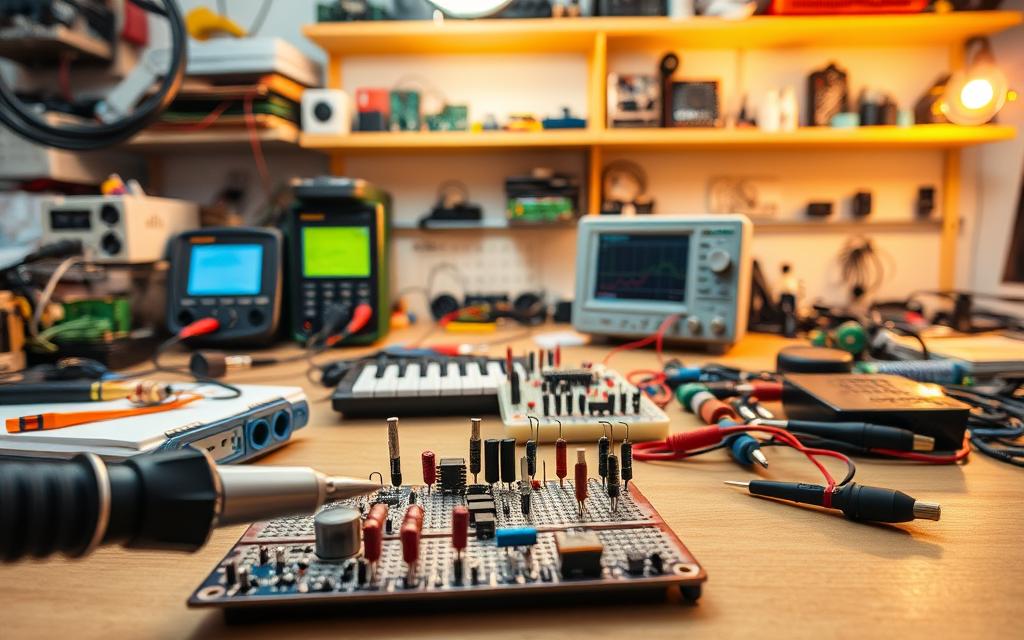
This field combines theory with real-world use, focusing on creating and fixing electronic systems. It’s different from just studying, as it involves solving problems with your hands. This approach drives new ideas in many industries.
People in this field work with many electronic devices. These include things like manufacturing tools, medical gear, and communication systems. They need strong technical skills and thinking abilities to tackle tough problems.
Readers exploring electronics engineering hands often end up considering plastic exploring science engineering as part of the same topic.
Many schools offer detailed training programs, like the electronics engineering technology program. These programs help students get ready for work right away. They learn by doing and working on projects.
There’s a big need for skilled technicians, making this a great career path. Graduates can work in areas like telecommunications, automation, and consumer electronics. Their knowledge in practical electronics applications is very useful.
Understanding What Is Electronics Engineering Technology
Electronics engineering technology is all about making electrical ideas work in real life. It’s about turning designs into real systems. This field is all about doing things with your hands, not just thinking about them.
Students learn about digital and analog circuits, computer programming, and microprocessors. They also get into control systems and communications technology. All this learning is hands-on, just like the real world.
The Practises of an Electronics Engineering Technologist
Electronics engineering technologists do important hands-on work in many fields. Their electronics technologist roles include making designs work and keeping systems running right. They fix problems and make sure everything is working as it should.
Related Posts:






Some of their main jobs are:
- Building and testing electronic circuits
- Setting up and adjusting electronic gear
- Fixing system problems
- Writing down how things are done and what results are found
- Working with engineers to make designs better
These experts are key in turning ideas into real, working systems. They use their skills to make engineering ideas real in the world.
Distinctions from Traditional Electronics Engineering
Electronics engineering technology and traditional electronics engineering are different. The technology side focuses on doing things with your hands, not on complex math.
Here’s what sets them apart:
- Technology programmes focus on lab work and projects
- Engineering programmes are more about math and theory
- Technologists work on keeping systems running
- Engineers design new systems and parts
Applied electronics engineering technology is great for those who like to get their hands dirty. It prepares students for careers where they work directly with equipment, not just design it.
Fundamental Hands-On Skills in Electronics Technology
Modern electronics engineering technology programmes focus on practical skills. These skills are needed in the workplace. Students learn these skills through lab sessions that mimic real-world challenges.
Circuit Building and Testing Techniques
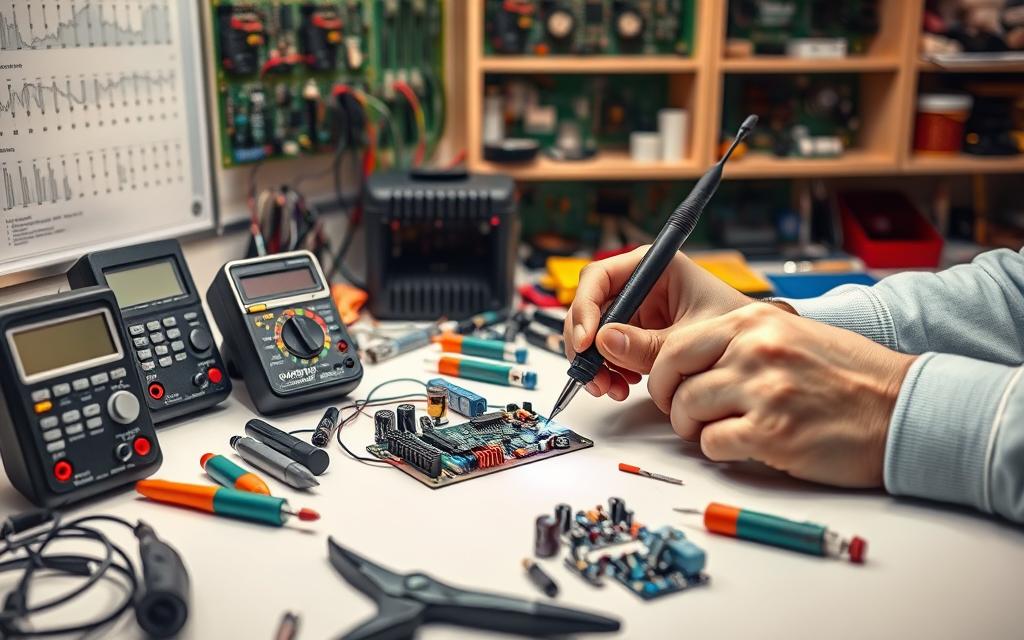
Circuit construction is key in electronic engineering technology. Students learn to build both analogue and digital circuits. They use different techniques for this.
- Component selection based on specifications and tolerances
- Proper breadboarding methods for prototype development
- PCB design and fabrication processes
- Signal measurement and analysis procedures
They use professional equipment to test circuit performance. This helps develop critical thinking and technical precision.
Programming Microcontrollers like Arduino and Raspberry Pi
Programming embedded systems is a vital skill. Students work with platforms like:
- Arduino for basic input/output control and sensor integration
- Raspberry Pi for more complex computing tasks
- Various development environments and programming languages
These platforms help students learn about real-world applications. This includes automation and data acquisition systems.
Troubleshooting and Debugging Electronic Systems
Systematic fault-finding is a key part of electronic systems testing. Students learn how to find and fix problems. They use:
- Visual inspection techniques for physical defects
- Signal tracing using oscilloscopes and logic analysers
- Voltage and current measurement analysis
- Component testing and replacement protocols
These methods help develop analytical thinking. This is important for technical support and maintenance roles. The curriculum focuses on logical problem-solving for various electronic systems.
Tools and Equipment for Real-World Applications
Practical electronics engineering needs special tools. These tools help professionals design, test, and use electronic systems well. The right tools turn theory into real results in many fields.
Essential Measurement Tools: Digital Multimeters and Oscilloscopes
Getting accurate measurements is key in electronics. Digital multimeters are great for checking voltage, current, and resistance. They give important data during design and fixing problems.
Oscilloscopes show electrical signals in a visual way. They help find signal issues and check how circuits work. This is something multimeters can’t do.
Today’s oscilloscopes can store digital signals. This lets engineers study short events in detail. Check out this guide to see how these tools are vital in labs.
Prototyping Equipment: Breadboards and Soldering Stations
Breadboards make quick circuit tests without lasting connections. They let engineers try out ideas fast. The clips hold different types of leads without soldering.
When ideas are good, soldering stations make them real. Good stations have:
- Temperature control for different solder types
- ESD protection for sensitive components
- Multiple tip options for various soldering tasks
Good soldering makes sure products work well. Breadboards and soldering stations are key for moving from idea to real product.
Simulation Software: NI Multisim and PSpice
Nowadays, virtual testing is big in electronics. Tools like NI Multisim and PSpice let engineers test circuits virtually. This saves time and money.
NI Multisim is easy to use for designing and simulating circuits. It has lots of components and tools for detailed analysis. It supports:
- Analog and digital circuit simulation
- Interactive component models
- Integration with PCB design tools
PSpice is great for complex systems. It does detailed tests like transient response and frequency analysis. It’s a top tool in the industry.
Both NI Multisim and PSpice help find problems early. They are key in today’s electronics engineering.
Industry-Specific Hands-On Applications
Electronics engineering technology is used in many industries. People use their skills to make, keep, and better complex systems. These industrial electronics applications show how theory becomes real solutions that drive today’s industries.
Automotive Systems: Engine Control Units and ADAS
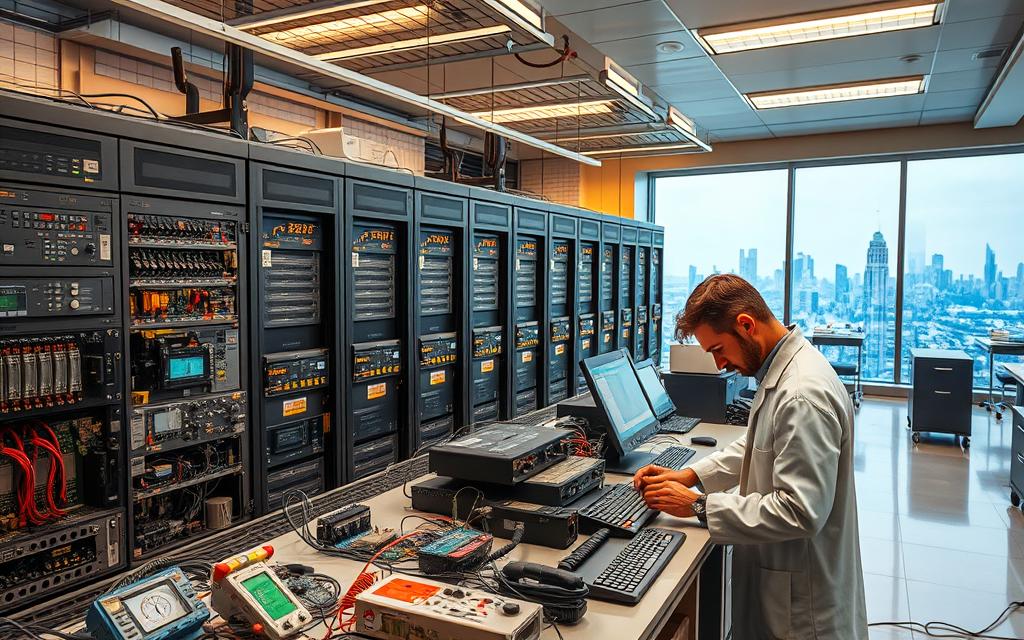
Today’s cars need advanced automotive electronic systems. These systems need skilled technologists for their development and upkeep. Engine Control Units (ECUs) are key, controlling everything from fuel to emissions.
Technologists do hands-on work with ECUs, like:
- Diagnosing fault codes with special tools
- Adjusting sensors for better engine performance
- Testing networks between vehicle parts
Advanced Driver Assistance Systems (ADAS) are another key area. Technologists play a big role here. These systems include:
| ADAS Component | Function | Technologist’s Role |
|---|---|---|
| Adaptive Cruise Control | Maintains safe following distance | Radar calibration and testing |
| Lane Keeping Assist | Prevents unintended lane departure | Camera alignment and software validation |
| Automatic Emergency Braking | Detects possible collisions | Sensor integration and response testing |
Consumer Devices: Smart Home Gadgets and Audio Equipment
The consumer electronics field offers many chances for hands-on work. Smart home systems need technologists to make sure devices work together well.
Working with audio equipment is another special area. Technologists deal with amplifiers, digital signal processing, and sound tuning. They fix audio problems and improve sound quality through testing.
Industrial Systems: Programmable Logic Controllers and Motor Drives
Industrial automation uses Programmable Logic Controllers (PLCs) to control processes and machines. Technologists program, keep up, and fix these systems with ladder logic and other languages.
Motor drives are also key in industrial electronics applications. They control electric motor speed and torque in factories. Technologists set up drive settings, find and fix problems, and add safety features.
Some tasks include:
- Programming PLCs for automated sequences
- Setting up and configuring variable frequency drives
- Fixing communication issues between devices
- Adding safety locks and emergency stop systems
Career Pathways with Practical Emphasis
Electronics engineering technology graduates have many career paths. They use their technical skills in various industries. Their work solves real problems, from making products to finding new ideas.
Hands-On Roles in Manufacturing and Quality Assurance
Many jobs in manufacturing need electronics technology experts. They build, test, and check electronic products. This ensures they work well and meet high standards.
Quality assurance technicians use special tools to test products. They find problems, check if products meet standards, and keep records. This job needs sharp analytical skills and attention to detail.
Electronic engineers in manufacturing work on communications and medical devices. They fix power equipment and improve how things are made. These jobs offer a chance to move up to management roles.
Technical Support and Field Engineering Positions
Technical support jobs let graduates help customers fix issues. Field engineers install and fix electronic systems at client sites. They need good communication and problem-solving skills.
Remote support has grown, giving more chances for electronics experts. They solve problems online and help clients. They connect technology companies with their users.
Field engineering involves working with complex systems. Technicians keep these systems running smoothly. This job is perfect for those who like hands-on work.
Innovation in IoT and Embedded Systems Development
The Internet of Things (IoT) has opened up new areas in embedded systems. Experts design smart devices that talk to each other. They work on gadgets and industrial sensors.
Embedded systems developers mix hardware and software skills. They program chips, design boards, and write firmware. This field values creativity and technical skills equally.
“The convergence of physical devices with digital intelligence represents the next frontier in electronics technology.”
IoT specialists work on smart homes, wearables, and industrial systems. Their work leads to new ideas in healthcare and transport. This field offers constant learning and good pay.
Those in embedded systems need to know programming and CAD. They must grasp circuit design and wireless tech. These skills put them at the edge of technology in many fields.
Conclusion
Electronics engineering technology is key in linking theory to practical use. It teaches people to turn electronic designs into working systems in many fields.
Good education in electronics technology leads to great careers in making, support, and new ideas. These experts make electronic solutions real, working on cars to smart homes. They use tools like Arduino and Raspberry Pi.
The field keeps growing with new tech in robots, green energy, and phone systems. This means skilled electronics technologists are always wanted. They help move our world forward with new tech.
FAQ
What is electronics engineering technology?
Electronics engineering technology combines theory with practical skills. It involves creating, testing, and fixing electronic systems. This is done in fields like manufacturing, telecom, and medical devices. It focuses on solving problems with your hands.
How does electronics engineering technology differ from traditional electronics engineering?
Technology focuses on doing things in real life, not just theory. Both fields share some knowledge, but tech programmes teach more about practical skills. This leads to careers that are all about hands-on work.
What are the core practical skills developed in electronics engineering technology programmes?
Key skills include making and testing circuits, and using microcontrollers. You also learn to fix electronic systems. These skills are vital for jobs that involve working with electronic devices and systems.
Which tools are essential for electronics engineering technologists?
Important tools include digital multimeters and oscilloscopes. You also need breadboards and soldering stations for making prototypes. Plus, software like NI Multisim and PSpice for testing before making things real.
In which industries do electronics engineering technologists typically work?
They work in many areas like cars, consumer electronics, and industry. They help make technology better and keep systems running smoothly.
What career opportunities are available for graduates in electronics engineering technology?
Graduates can find jobs in making and checking products, technical support, or in new tech areas. These roles value practical skills for improving and fixing electronic systems.
How important is hands-on experience in electronics engineering technology?
Hands-on experience is key. It’s all about using what you know to solve real problems. Being good with tools and solving problems is essential for the job.
What role do electronics engineering technologists play in emerging technologies?
They help bring new tech to life, like IoT, green energy, and advanced comms. Their skills make sure new tech works well and fits with what we already have.